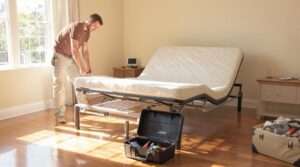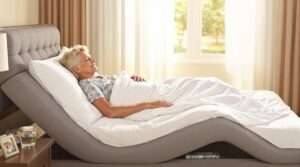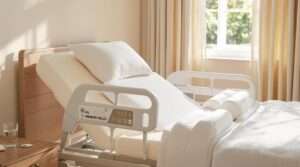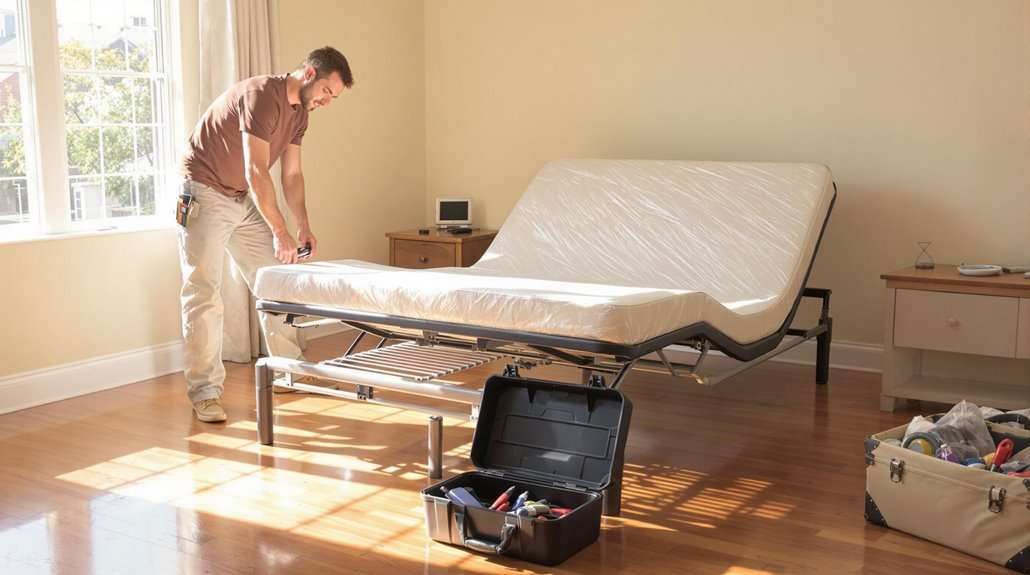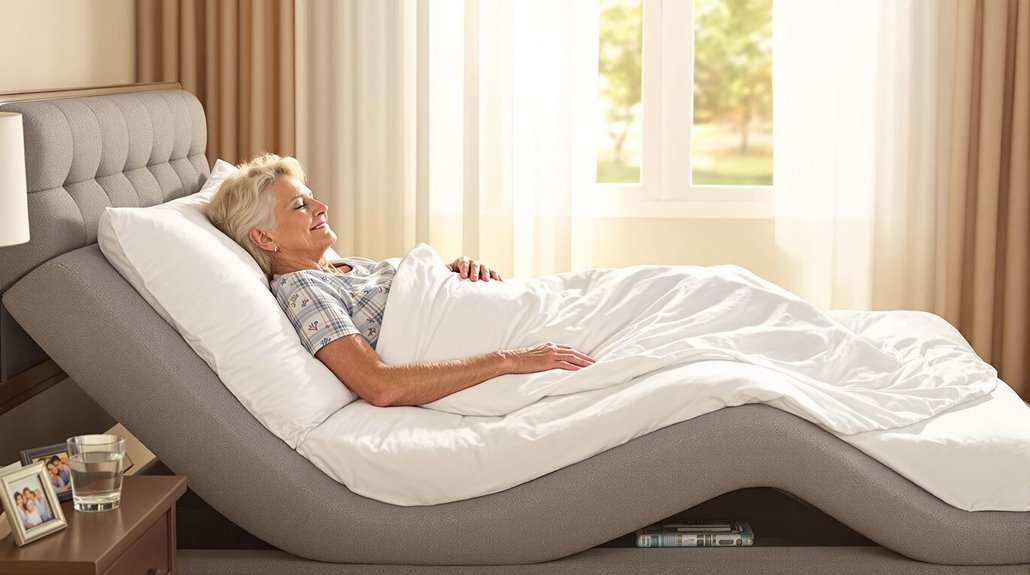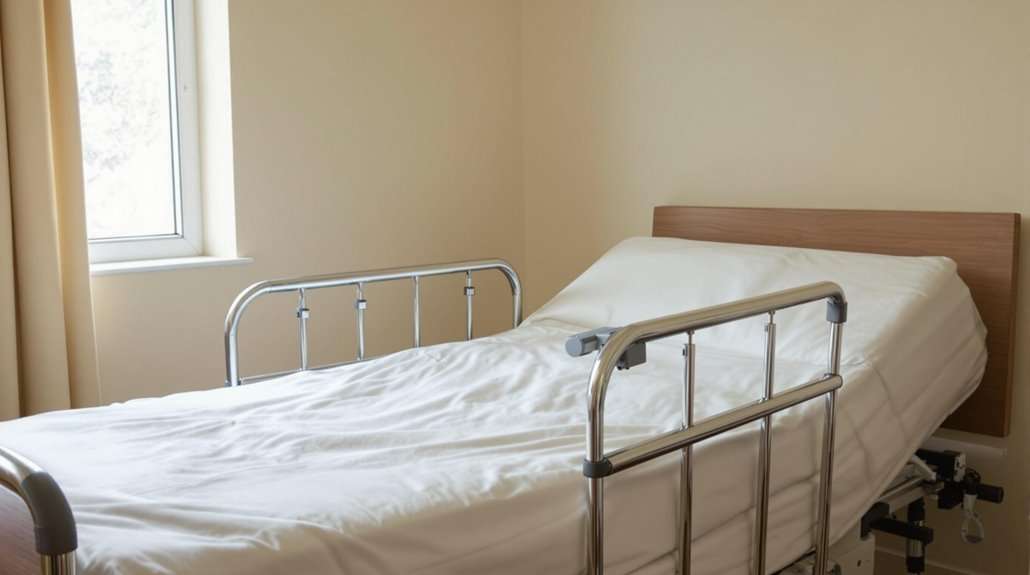



When choosing a bed for elderly parents, focus on support and safety. Opt for a medium-firm mattress with high-density foam or hybrid materials for proper pressure relief and spinal alignment. Guarantee the bed frame is stable and at an accessible height, ideally between 25 to 36 inches, to minimize fall risks. Look for adjustable beds with features like zoned coils, edge support, and easy-to-use controls, guaranteeing versatile sleeping positions. Safety enhancements such as bed rails and voice activation improve usability. Durability and a solid warranty are essential for long-term value. More insights are available for enhancing the sleeping environment.
📋✅
- Ensure the bed has adjustable height to facilitate safe entry and exit for elderly parents.
- Look for mattresses with medium-firm support to accommodate various sleeping positions and provide essential pressure relief.
- Choose beds with simple remote controls, large buttons, and clear labels for ease of use.
- Select a bed with strong edge support to safely use the entire surface area.
- Consider beds with adjustable head positions to help with health issues like snoring and acid reflux.
Key Mattress Features

Selecting the right mattress for elderly parents involves understanding key features that cater to their specific needs, focusing on support, cooling, firmness, and durability. Mattress materials play a vital role in guaranteeing sleep quality and safety. High-density foam and coil layers are integral for providing necessary support and pressure relief. These materials not only contour to the body, alleviating pressure points, but also enhance overall stability. Zoned coils, in particular, assist in offering targeted support, essential for preventing sinkage and maintaining proper alignment. Cooling and breathability are equally important considerations. Mattresses with breathable covers and gel-infused foam are designed to regulate temperature, enhancing comfort and preventing overheating. Internal airflow systems, facilitated by coil and layered constructions, promote adequate ventilation, vital for maintaining a consistent sleep environment. Firmness is another key aspect impacting sleep quality. Offering multiple firmness options can accommodate varying sleeping positions and preferences, with a medium-firm feel often providing an ideal balance of comfort and support. Durable mattress materials, including high-density foams and long-lasting coils, guarantee longevity and stability, ensuring that the mattress maintains its supportive qualities over time. Sleep Certified experts conduct refined mattress testing to ensure unbiased recommendations, which help in selecting the most suitable options for elderly needs. Prioritizing these features guarantees a comfortable, safe, and restful sleeping experience for elderly parents.
Essential Adjustable Bed Features
When selecting an adjustable bed for elderly parents, it is essential to prioritize features that enhance safety, usability, and space efficiency. Adjustable beds feature specialized mattresses that enhance comfort and support for aging bodies. Simple control systems, such as remote or app-based interfaces, guarantee ease of operation for both seniors and caregivers, while versatile adjustment options cater to individual comfort and medical needs. Additionally, space-saving designs, including wall-glide technology, optimize bedroom layout without compromising functionality.
Simple Control Systems
Steering the selection of adjustable beds for elderly parents requires a keen understanding of simple control systems, which are vital for ease of use and functionality. The integration of wireless remote controls and voice activation systems offers significant advantages, guaranteeing hands-free and convenient operation. These features cater to the needs of seniors who may have mobility challenges, allowing them to adjust bed settings effortlessly. Additionally, large buttons and clear labels on control devices are essential for intuitive use, reducing the risk of confusion or error. Easy-to-use controls for effortless adjustments are designed specifically for seniors' unique needs, ensuring that the customizable positions enhance sleep quality and promote overall well-being.
| Feature | Benefit | Importance for Elderly Users |
|---|---|---|
| Remote Controls | Convenient operation from a distance | Enhances independence |
| Voice Activation | Hands-free adjustment capability | Facilitates ease of use |
| Large Buttons | Simplifies interaction | Reduces user error |
| Clear Labels | Guarantees intuitive use | Minimizes confusion |
Equally important is the availability of easy-to-understand instructional manuals, which guide users through the setup and daily operation of these systems. This documentation guarantees that seniors and their caregivers can maximize the bed's functionality safely and confidently. By prioritizing these features, caregivers can effectively support the well-being and comfort of their elderly loved ones, enhancing their overall quality of life.
Versatile Adjustment Options
Among the myriad features integral to adjustable beds, versatile adjustment options stand out as essential for meeting the diverse needs of elderly users. These beds offer advanced positioning capabilities that provide significant elevation benefits, assisting with health issues such as snoring, acid reflux, and back pain. Elevation settings for the head and feet can promote better breathing, aid circulation, and offer relief from pressure points, thereby enhancing overall comfort and well-being.
The inclusion of preset positions such as zero gravity and anti-snore guarantees that users can shift to ideal positions with ease, offering immediate comfort and support. Additionally, advanced tilt functions like Trendelenburg and reverse Trendelenburg positions further aid in circulation and pressure relief, making them indispensable for elder care. Massage options integrated into the bed can effectively alleviate joint pain and arthritis, providing therapeutic benefits that enhance rest and relaxation for elderly individuals.
Adjustable height settings facilitate safe and easy entry and exit, reducing the risk of falls. This user-friendly feature is vital for both seniors and caregivers, emphasizing a commitment to safety and accessibility. Consequently, these versatile adjustment options contribute to a holistic care approach. Medicare Part B may cover adjustable beds if medically necessary, typically requiring a doctor's prescription, which is crucial for financial planning.
Space-Saving Designs
Space-saving designs in adjustable beds for elderly parents stand as a crucial consideration, particularly for maximizing utility in limited living areas. Innovative designs offer compact solutions that guarantee safety, comfort, and accessibility without compromising on quality. Beds featuring sturdy construction and secure locking mechanisms are essential to prevent falls and injuries, while easy-to-use controls facilitate adjustments and folding, making them adaptable to varying needs. The use of organic materials in the construction of these beds can improve indoor air quality and reduce exposure to harmful chemicals, contributing to better sleep quality and overall health for elderly users.
| Feature | Benefits |
|---|---|
| Sturdy Construction | Enhances safety, minimizing fall risk |
| Compact Design | Saves space in small rooms or apartments |
| Built-in Storage | Provides easy access to essentials |
| Multi-functional Options | Incorporates desks, seating, or additional storage |
Space optimization is further achieved through foldable or retractable beds that free up floor space when not in use. These beds are designed to accommodate medical equipment or assistive devices conveniently. Customizable sizes and layouts guarantee a perfect fit for unique room dimensions, enhancing both safety and functionality. Additionally, integrating surrounding storage solutions allows elderly users to access personal items effortlessly, reducing the need to leave the bed and minimizing potential hazards. Maintenance and durability also play a significant role, with durable materials and easy-to-clean surfaces guaranteeing longevity and ease of upkeep. By focusing on these features, caregivers can better serve their elderly parents' needs.
Comfort and Support Options

Selecting the right mattress for elderly parents is essential to ensuring both comfort and support, addressing their specific health and mobility needs. When examining mattress materials, hybrid and memory foam options are highly recommended. These materials provide important pressure relief, especially beneficial for seniors with joint pain. Furthermore, the choice of mattress should accommodate various sleep positions, ensuring spinal alignment and reducing discomfort. Here are key features to evaluate:
- Firmness Levels: Opt for a medium-firm mattress to achieve a balance between support and comfort. This prevents aggravating pain often associated with overly soft or firm mattresses.
- Breathability: Select mattresses with breathable designs or cooling features like gel-infused polyfoam to aid in temperature regulation, an essential factor for elderly individuals.
- Zoned Support: Look for mattresses offering zoned support to provide targeted contouring and maintain spinal alignment, alleviating back pain effectively. Durability is also a crucial factor, ensuring the mattress provides consistent support over time.
- Edge Support: Robust edge support is important, allowing seniors to utilize the entire bed surface safely and facilitating easier changes in and out of bed.
Health and Accessibility Considerations
Guaranteeing the health and accessibility of a bed for elderly parents is critical, particularly for those with limited mobility or specific health conditions. A well-designed bed can mitigate risks associated with pressure ulcers and respiratory issues, offering pressure relief through adjustable features. Elevating the head of the bed can improve breathing and reduce back pain. To enhance accessibility, consider beds with adjustable height and integrated mobility aids, such as grab bars, which facilitate safer transfers and minimize fall risks. Limited mobility increases the risk of falls and injuries, making adjustable hospital beds with safety features essential for elderly care.
| Health Feature | Accessibility Feature |
|---|---|
| Pressure Relief | Adjustable Height |
| Respiratory Support | Bed Rails |
| Back Pain Alleviation | Bed Alarms |
| Sleep Optimization | Supportive Pillows |
| Depression Mitigation | Transfer Aids |
Safety features are paramount, with bed rails and alarms providing essential support and alerts to caregivers. Regular maintenance, including cleaning and mechanical checks, guarantees continued safety and functionality. Furthermore, the strategic placement of supportive pillows can maintain proper body alignment and prevent falls. Implementing these elements, alongside ongoing assessments by healthcare professionals, supports a thorough approach to elder care. Prioritizing these considerations will greatly enhance the quality of life for elderly parents, fostering a secure and comfortable environment.
Practical Buying Considerations

When considering the purchase of a bed for elderly parents, several practical factors must be taken into account to guarantee both safety and comfort. A focus on material durability is paramount; selecting a sturdy frame made of reinforced steel or quality wood guarantees long-lasting stability and prevents collapses. Additionally, safety accessories such as anti-fall features, which include height adjustment and secure side rails, are critical in minimizing the risk of falls. Frequent waking with aches and pains indicates potential mattress issues, which suggests the need for a supportive and comfortable sleep surface.
To better assist in making a practical decision, consider the following factors:
- Safety and Stability: Opt for beds with a solid frame, ideal height (20-23 inches), and safety rails to provide necessary support and accessibility.
- Comfort and Support: Choose orthopedic mattresses and adjustable beds that offer medium to medium-firm firmness, guaranteeing pressure relief and spinal support.
- Ease of Use and Maintenance: Look for beds with user-friendly controls, white glove delivery, and easy-to-clean materials to enhance usability and hygiene.
- Budget and Longevity: Evaluate beds that present a good balance of quality and cost, considering long-term investments and warranty options for sustained value.
Expert Buying Tips
While practical considerations lay the groundwork for choosing a bed for elderly parents, expert buying tips further refine the selection process, targeting specific features that enhance comfort, safety, and independence. Prioritize bed safety by selecting a mattress that balances cushioning and support, like memory foam or hybrid options, to conform to the body's contours and alleviate pressure points. Adjustable beds with electric motors and user-friendly controls can greatly aid in reducing strain on joints, making it easier for caregivers to provide support. Many adjustable beds also feature built-in massage units that can help alleviate discomfort and enhance circulation during extended periods of bed rest.
Consider safety and accessibility by verifying the bed height is between 25 to 36 inches to minimize fall risks. Incorporate guardrails or elderly bed rails to prevent accidents during sleep. For added caregiver support, choose beds with mobility aids like wheels, facilitating room rearrangement, but verify they have locking mechanisms to secure the bed in place.
Focus on long-term considerations by opting for high-quality materials and beds with good warranties, verifying durability and peace of mind. Select storage solutions with easy-to-use drawers to minimize strain. Finally, enhance the bedroom environment with clear pathways and adequate lighting, verifying a safe and comfortable space for daily activities.
Frequently Asked Questions
Are There Eco-Friendly Mattress Options Suitable for Elderly Parents?
Natural materials like organic cotton and latex can enhance comfort levels, essential for elderly parents. Notably, 85% of eco-friendly mattresses offer improved breathability, aiding temperature regulation. This guarantees a safe, supportive sleep environment, aligning with a service-oriented focus.
What Are the Best Bed Frame Materials for Durability?
When evaluating bed frame durability, wooden frames, particularly those crafted from solid, sustainably sourced wood, are superior. Metal frames, although durable, may pose health risks due to toxic coatings and EMF exposure, making wooden frames a safer choice.
How Often Should a Mattress Be Replaced for Optimal Support?
Like a trusted bridge, a mattress must be replaced every 7-10 years to guarantee ideal support needs are met. Regular inspections, akin to bridge maintenance, can extend mattress lifespan, guaranteeing both safety and comfort for users.
Can Smart Technology Enhance Sleep Quality for Seniors?
Smart technology can markedly enhance sleep quality for seniors by incorporating health tracking features that monitor essential signs and sleep patterns. Smart sleep systems facilitate improved comfort, safety, and overall well-being, contributing to more restful and restorative sleep.
Are There Financing Options Available for Purchasing Beds for Seniors?
While concerns about affordability may arise, various financing plans, including 0% APR options, facilitate budget-friendly purchases. Additionally, mattress warranties guarantee long-term safety and functionality, making these options ideal for those committed to serving seniors' needs effectively.