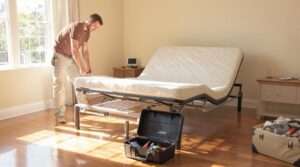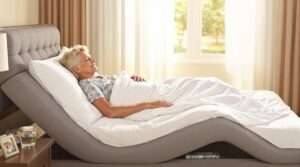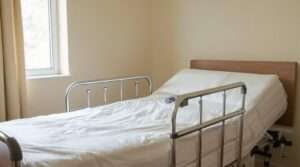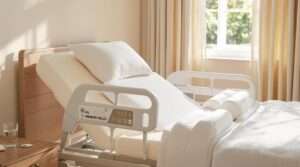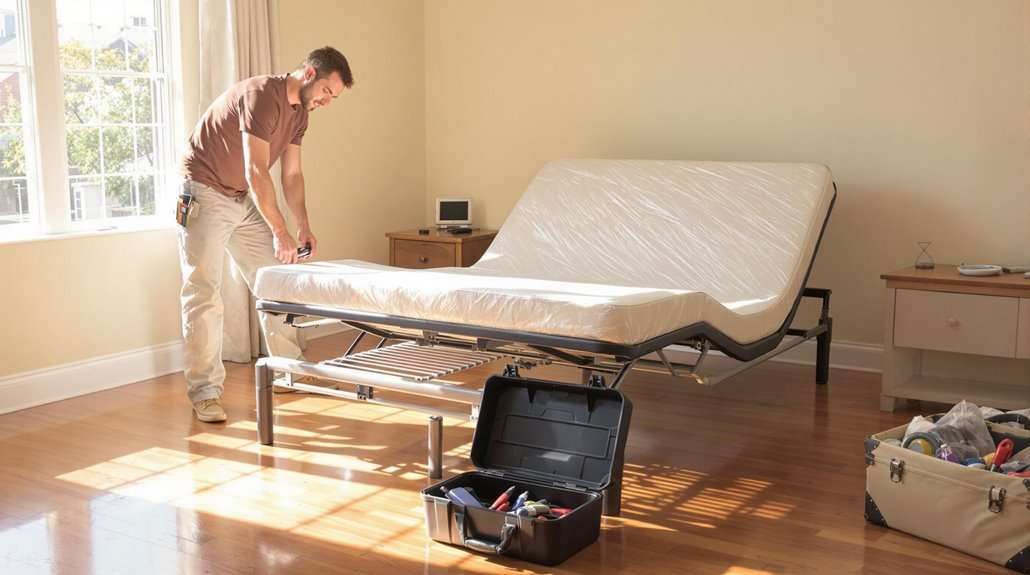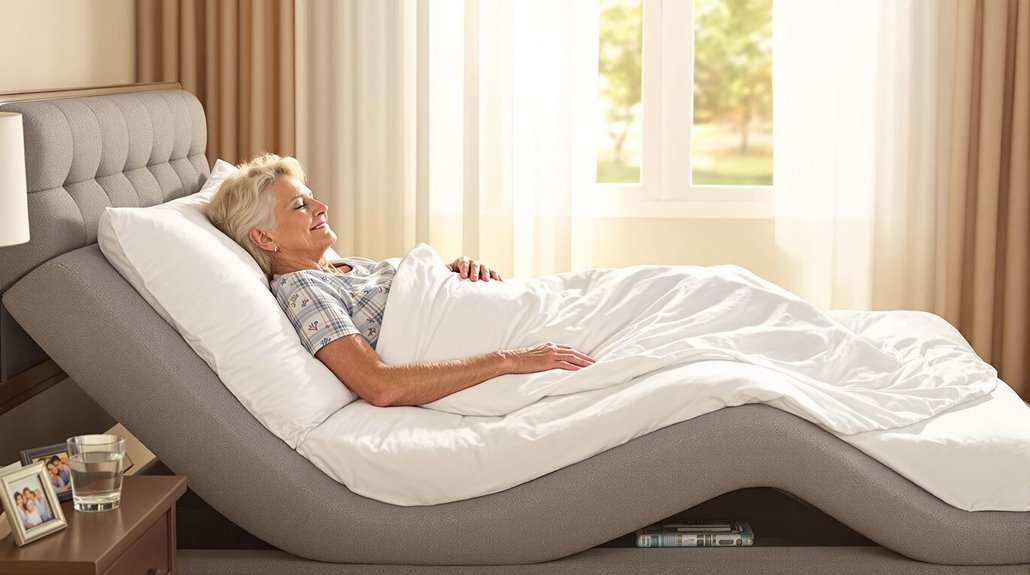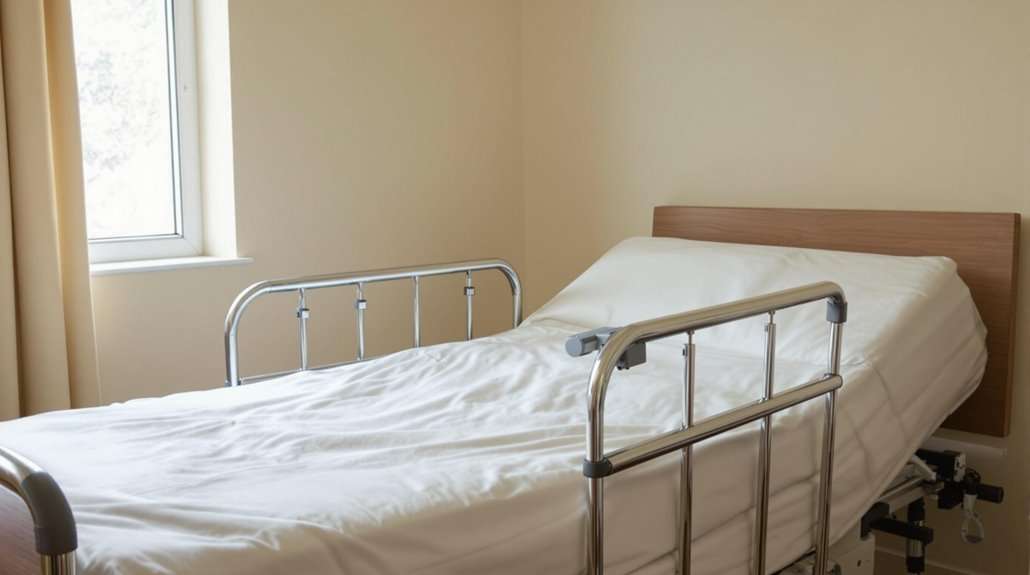



Hospital beds and elderly beds differ primarily in their design focus and intended use. Hospital beds feature advanced medical capabilities, including CPR functionality, thorough safety systems, and medical-grade materials for rigorous sanitization. They prioritize acute care needs with extensive positioning options and caregiver access. In contrast, elderly beds emphasize long-term residential comfort, featuring simplified controls, aesthetic home integration, and optional safety features. While hospital beds require strict medical compliance and professional maintenance, elderly beds offer a more economical solution for aging in place. Understanding these distinctions helps guarantee appropriate selection for specific care requirements.
📋✅
- Hospital beds are built for acute medical care with advanced features like CPR functionality, while elderly beds focus on long-term comfort.
- Hospital beds use medical-grade materials for sanitization, whereas elderly beds emphasize home aesthetics and blend with residential décor.
- Safety features are more comprehensive in hospital beds, including built-in rails and emergency backup power, compared to simpler elderly bed designs.
- Hospital beds require strict maintenance protocols and professional inspections, while elderly beds need less intensive maintenance for home use.
- Hospital beds cost significantly more due to advanced medical features, while elderly beds offer more economical options for residential care.
Key Design Features

The fundamental design features distinguishing hospital beds from elderly beds lie in their specialized medical functionality and safety considerations. Hospital beds incorporate extensive adjustable settings that enable precise positioning for medical procedures and patient comfort, including height adjustability for safer transfers and articulation capabilities for various therapeutic positions. Regular maintenance and lubrication of these beds' moving components ensures optimal functionality and longevity. These beds are specifically engineered to provide enhanced medical support while maintaining a home-friendly appearance.
These medical-grade beds prioritize safety enhancements through integrated features like secure side rails with locking mechanisms, which provide essential fall prevention and transfer support. The beds include rapid-response CPR functionality, allowing immediate emergency care when required. Additionally, the construction emphasizes clinical utility with specialized bed rail brackets and control systems designed for healthcare environments.
The design architecture focuses on pressure-relief features through specialized mattress support systems that distribute weight effectively, reducing the risk of pressure sores. Full-electric models offer maximum control over positioning through remote operation, while manual options provide cost-effective alternatives. These beds incorporate medical-grade materials and components that withstand rigorous sanitization protocols, distinguishing them from standard elderly beds. The integration of over-bed tables and trapeze bars further exemplifies their specialized medical purpose.
Primary Uses and Applications
Hospital beds and elderly beds serve distinctly different primary functions, with hospital beds engineered for acute medical care and rehabilitation settings, while elderly beds are designed for long-term residential care and daily living support. The hospital environment requires beds that facilitate medical procedures, monitoring, and short-term recovery, incorporating features such as Trendelenburg positioning and mandatory safety rails for clinical applications. In contrast, elderly beds emphasize sustained comfort and independence through adaptive features like optional safety rails, pressure-relief surfaces, and ergonomic adjustments that support routine daily activities in a home setting. Both types feature control panels for seamless adjustments of bed positions and functions. Senior beds are specifically crafted to blend with home décor while maintaining essential functionality for aging residents.
Medical Vs Long-Term Care
Understanding the distinction between medical and long-term care applications reveals fundamental differences in how hospital beds and elderly beds serve their respective purposes. Hospital beds prioritize medical interventions and patient mobility, featuring clinical designs with thorough adjustability to facilitate treatment procedures and recovery environment optimization. These beds incorporate built-in safety rails, control panels, and specialized accessories like trapeze bars and overbed tables to support acute medical care requirements. The beds' electric-powered components enable seamless adjustments for both patients and caregivers.
In contrast, elderly beds focus on sustained comfort and extended-use applications, particularly in residential or long-term care settings. While maintaining essential safety features, these beds emphasize a more home-like aesthetic and customizable dimensions to suit various living spaces. The design prioritizes the specific needs of elderly individuals with limited mobility, offering adjustable height mechanisms and optional side rails that enhance safety without compromising comfort.
The application context further differentiates these beds, with hospital beds serving temporary medical recovery needs and frequent clinical interventions, while elderly beds address ongoing care requirements through extended periods. This fundamental distinction influences their construction, with hospital beds featuring standardized clinical specifications and elderly beds offering more flexibility in design and customization options.
Daily Living Support Features
Key differences in daily living support features between hospital beds and elderly beds manifest through their distinct operational priorities and design implementations. Hospital beds emphasize thorough caregiver ergonomics through extensive height adjustability and specialized features supporting medical interventions. These beds incorporate advanced safety mechanisms, including side rails, locking wheels, and emergency power systems, facilitating ideal patient care and reducing caregiver strain during medical procedures. The integrated call button system allows immediate communication with medical staff during emergencies.
In contrast, elderly beds prioritize home integration and long-term comfort while maintaining essential safety features. These beds balance aesthetic considerations with practical functionality, offering simplified adjustment mechanisms and optional safety rails that support patient mobility without compromising the residential environment. While hospital beds focus on medical accessibility with features like Trendelenburg positioning and specialized mattress compatibility, elderly beds emphasize comfort-oriented features such as massage functions and customizable positions for daily living.
Both bed types support caregiver assistance and patient transfers, but hospital beds provide more extensive medical support features, while elderly beds enhance comfort and home integration. This differentiation reflects their respective environments and primary use cases, with hospital beds serving acute care needs and elderly beds facilitating long-term residential care.
Rehabilitation Setting Applications
Medical rehabilitation settings reveal fundamental distinctions between hospital beds and elderly beds in their primary applications and functionalities. Hospital beds incorporate advanced rehabilitation technology specifically designed for clinical environments, featuring specialized positioning capabilities like Trendelenburg adjustments and integrated safety systems essential for patient care.
| Feature | Hospital Beds | Elderly Beds |
|---|---|---|
| Primary Purpose | Medical treatment & rehabilitation | Basic comfort & mobility |
| Safety Features | Medical-grade rails & emergency systems | Basic safety rails |
| Technical Capabilities | Advanced positioning & medical functions | Limited positioning options |
| Care Setting | Clinical environments & rehabilitation centers | Home & assisted living |
| Support Equipment | Medical accessory compatibility | Basic comfort additions |
The emphasis on patient mobility in hospital beds is evidenced through their sophisticated adjustment mechanisms and compatibility with medical accessories like trapeze bars and overbed tables. These beds support extensive rehabilitation protocols while incorporating features that enhance caregiver efficiency. For temporary rehabilitation needs, medical professionals often recommend hospital bed rentals, particularly when patients require specific therapeutic positioning or medical interventions. The selection process should prioritize the patient's medical requirements, mobility limitations, and the level of necessary caregiver assistance.
Safety Considerations

Safety considerations between hospital beds and elderly beds manifest primarily through their distinct fall prevention mechanisms and protective features. Hospital beds incorporate extensive built-in safety systems, including standardized bed rails, emergency backup power, and integrated control panels for medical staff access, while elderly beds typically offer optional safety rails and simplified controls designed for home use. The bed rail configurations vary considerably, with hospital beds featuring full-length, institutional-grade side rails, whereas elderly beds commonly utilize partial rails or assistive handles that can be customized based on individual requirements.
Fall Prevention Features
Numerous fall prevention features distinguish hospital beds from elderly beds in their approach to patient safety. Hospital beds incorporate thorough fall risk management systems, including built-in safety rails, extensive height adjustment capabilities, and locking wheel mechanisms. These safety enhancements provide superior protection during patient transfers and overnight care compared to elderly beds.
Hospital beds feature sophisticated fall prevention mechanisms, such as rapid-deflate CPR functionality and emergency power backups, ensuring continuous safety during critical situations. In contrast, elderly beds typically offer simplified safety features, with optional safety rails and limited height adjustment ranges. While elderly beds prioritize comfort and general-purpose use in home settings, they may not provide the same level of fall prevention as their clinical counterparts.
The ergonomic design of hospital beds specifically addresses caregiver needs, reducing strain during patient transfers and minimizing fall risks. These beds maintain consistent safety standards through integral rails and wider height adjustment ranges, whereas elderly beds often rely on soft rails or lower-profile alternatives that may offer reduced protection. This fundamental difference in design philosophy reflects the distinct safety requirements between clinical and residential care environments.
Bed Rail Configurations
Bed rail configurations represent a key differentiating factor between hospital and elderly beds, building upon their broader fall prevention features. Hospital beds typically feature standard full-length rails with robust locking mechanisms, designed for maximum safety in clinical settings. These rails integrate seamlessly with the bed frame and incorporate entrapment protection measures to eliminate dangerous gaps between the rail and mattress.
Elderly beds offer more varied rail types and customization features to accommodate specific home care needs. These may include half-length rails for easier transfers, soft padded options for enhanced comfort, and telescoping designs that adjust to different positions. The rail brackets on elderly beds allow for flexible installation and removal, while maintaining necessary safety standards.
Both configurations prioritize essential safety considerations, including weight capacity requirements and quick-release mechanisms for emergency situations. Hospital beds typically feature more rigid, institutional-grade rails, while elderly beds emphasize adaptability and comfort-focused designs. Material options range from industrial-grade steel in hospital settings to aluminum and padded varieties in home care environments, all meeting strict compliance standards for patient security and caregiver accessibility.
Emergency Safety Controls
Emergency control systems fundamentally distinguish hospital beds from elderly beds in their approach to patient and resident safety. Hospital beds incorporate thorough medical-grade accessibility features, including emergency power backups, integrated control panels, and multiple adjustment capabilities for critical care scenarios. These systems enable precise positioning for medical procedures and include built-in alarms with call buttons for urgent situations.
In contrast, elderly beds prioritize user-friendly controls focused on home-based care, offering simpler electric adjustments and basic safety features. While they maintain essential functions for comfort and prevention of pressure sores, they typically lack the extensive medical capabilities of hospital beds.
| Feature | Hospital Bed | Elderly Bed |
|---|---|---|
| Power System | Emergency backup | Standard electrical |
| Controls | Clinical panels & pendants | Simple remote controls |
| Safety Alerts | Built-in alarms & call systems | Basic or none |
The distinction in emergency controls reflects their intended environments and purposes. Hospital beds emphasize clinical functionality with thorough safety systems for acute care settings, while elderly beds focus on accessible, simplified controls suitable for residential use. This differentiation directly impacts their effectiveness in managing various levels of medical needs and emergency situations.
Bed Types and Categories
The primary distinction between hospital and elderly beds lies in their fundamental design categories and intended applications. Hospital beds are categorized as medical equipment with thorough adjustable mechanisms, featuring full electric controls for head, foot, and height adjustments. These bed styles are engineered specifically for clinical settings, incorporating built-in safety rails and specialized medical features.
Elderly beds, conversely, represent a category oriented toward home-based long-term care. While they maintain some adjustability features, their design philosophy prioritizes integration with residential settings and aesthetic compatibility with home decor. These beds typically offer semi-electric or manual adjustment options, with modular components that can be customized according to individual needs.
The categorization extends to their structural elements and functionality. Hospital beds are constructed with medical-grade materials and include features like control panels, removable footboards, and integrated accessories such as trapeze bars and USB ports. Elderly beds focus on comfort-oriented features, incorporating high-low settings and soft-touch rails while maintaining a residential appearance. This categorical difference reflects their distinct purposes: hospital beds for medical treatment and recovery, elderly beds for sustainable long-term care.
Comfort and Customization Options

Building upon these distinct categories, comfort and customization features represent significant differentiating factors between hospital and elderly beds. The adjustability benefits in hospital beds focus primarily on medical necessities, incorporating full electric controls for head, foot, and height adjustments, along with specialized positions like Trendelenburg. Elderly beds emphasize comfort-oriented features while maintaining essential medical functionality.
| Feature Type | Hospital Bed | Elderly Bed |
|---|---|---|
| Adjustability | Full medical-grade controls | Simplified comfort controls |
| Safety Features | Medical rails, emergency backup | Soft rails, basic safety |
| Mattress Options | Clinical pressure relief | Comfort-focused support |
| Power Systems | Full-electric, backup power | Semi-electric common |
| Accessories | Medical equipment ports, trapeze | Built-in lighting, massage |
Both bed types offer diverse mattress options, though hospital beds prioritize clinical pressure relief for preventing bedsores, while elderly beds balance comfort with basic medical support. Hospital beds typically include medical-grade accessories and power systems, whereas elderly beds incorporate more lifestyle-oriented features such as massage functions and built-in lighting. The customization options reflect each bed type's primary purpose: medical care versus comfortable aging in place.
Cost and Maintenance Factors
Cost and maintenance considerations stand out as vital differentiating factors between hospital beds and elderly beds. In cost comparisons, hospital beds typically represent a higher investment due to their advanced medical features and safety designs, with full-electric models commanding premium prices ranging from hundreds to thousands of dollars. Elderly beds, while still incorporating comfort features like adjustable heights and soft rails, generally present a more economical option designed for residential settings.
Maintenance requirements also differ markedly between these two bed types. Hospital beds demand rigorous maintenance protocols, including professional inspection of motorized components, safety rails, and electronic systems to guarantee compliance with medical standards. Regular disinfection and cleaning of vinyl surfaces are essential for infection prevention. Conversely, elderly beds require less intensive maintenance, with practical maintenance tips focusing on routine cleaning, periodic checks of electronic controls, and occasional replacement of comfort features. While hospital bed maintenance often necessitates professional service, elderly bed upkeep can typically be managed by caregivers or family members, contributing to lower long-term maintenance costs and simpler care requirements.
Frequently Asked Questions
Can Regular Bed Sheets Fit on Hospital and Elderly Beds?
Sheet compatibility varies considerably based on mattress dimensions. Hospital beds require specialized extra-long twin fitted sheets, while elderly beds typically accommodate standard household sheet sizes, ensuring proper fit for their respective applications.
How Long Does It Typically Take to Assemble These Specialized Beds?
In what feels like a marathon of care, assembly time typically ranges from 30 minutes to several hours, depending on bed components and complexity. Professional installation generally requires under an hour for ideal setup.
Are There Weight Restrictions for Hospital Beds Versus Elderly Beds?
Weight capacity specifications are similar for both bed types, typically ranging from 350-500 pounds. Bariatric versions of either can accommodate up to 600+ pounds. Standard models require adherence to manufacturer-specified weight limitations.
Can These Beds Be Easily Moved Through Standard Doorways and Hallways?
Both bed types feature mobility features for doorway passage, though hospital beds may require more careful navigation. Design differences show elderly beds are typically optimized for residential spaces, while hospital beds need specific clearance considerations.
Do Insurance Companies Typically Cover the Cost of Either Bed Type?
Insurance coverage typically extends to hospital beds when deemed medically necessary, requiring pre-authorization and prescriptions. Elderly bed types are rarely covered, necessitating out-of-pocket payment unless covered by specialized long-term care insurance.
[CONCLUSION]:
The distinction between hospital beds and elderly beds lies primarily in their specialized functionalities and intended environments. While hospital beds prioritize medical accessibility and acute care features, elderly beds focus on long-term comfort and aging-in-place adaptability. Like a well-orchestrated medical symphony, each bed type serves its distinct purpose – hospital beds as instruments of recovery, and elderly beds as foundations for dignified senior living. The choice between them depends on specific medical needs, duration of use, and care requirements.