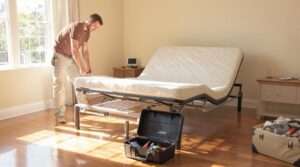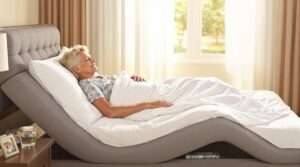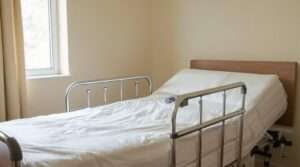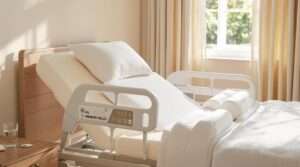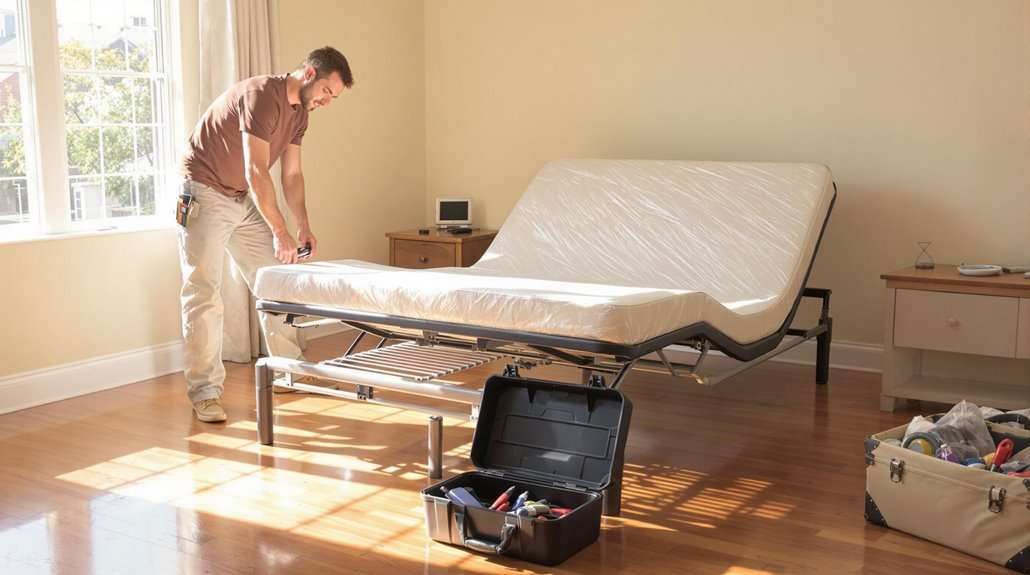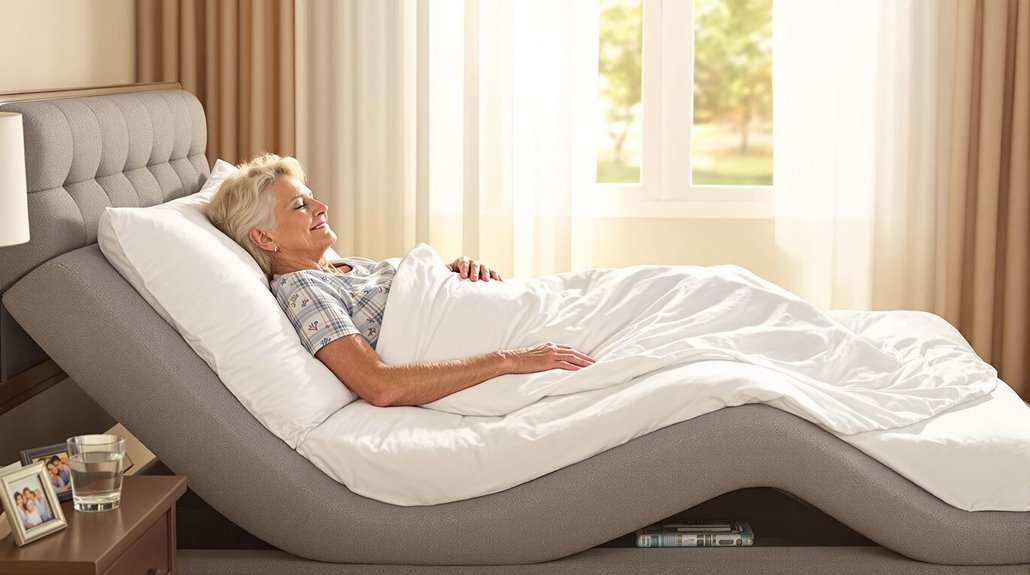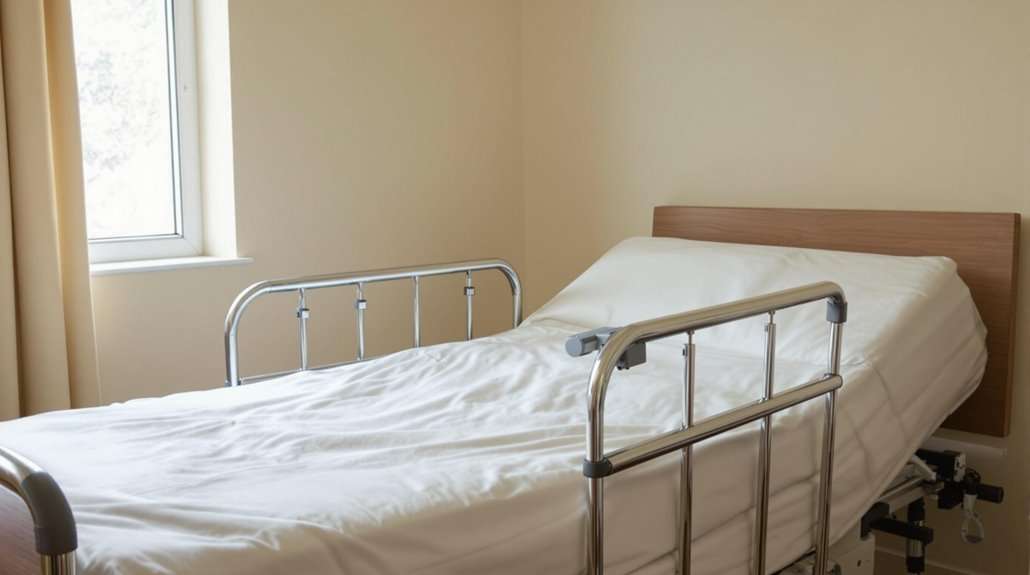



An elderly bed should prioritize safety, comfort, and accessibility for both patients and caregivers. Essential features include secure side rails, emergency stop functions, and lock mechanisms to prevent accidents. Adjustable height settings and ergonomic controls enable independence while supporting caregiver assistance. The bed should incorporate pressure-relief features, memory foam, and zoned support systems for maximum comfort. Medical-grade specifications like CPR valves and fall alert systems guarantee emergency preparedness. Built-in communication systems and therapeutic positioning options enhance care delivery. These core elements work together to create a thorough solution that addresses the complex needs of elderly care.
📋✅
- Adjustable side rails and emergency stop functions to prevent falls and accidents while providing secure support during movement.
- Height-adjustable frame with lockable wheels to facilitate easy entry/exit and enable caregivers to work at ergonomic levels.
- Pressure-relieving mattress with memory foam and zoned support to prevent bedsores and ensure comfortable sleep.
- Easy-to-use controls for adjusting head and foot positions, helping with circulation and various medical conditions.
- Built-in emergency response features and communication systems to quickly alert caregivers when assistance is needed.
Safety Essentials for Hospital Beds

Hospital beds' safety features serve as critical components in preventing accidents and guaranteeing patient well-being in healthcare settings. Proper bed rail safety stands at the forefront of these considerations, requiring secure installation and appropriate positioning against the mattress to eliminate dangerous gaps that could lead to entrapment or strangulation.
Healthcare providers must carefully evaluate whether to implement full-length or half-length bed rails based on individual patient needs. When utilizing bed rails, proper installation and regular maintenance guarantee they remain firmly attached and functional. Non-slip surfaces integrated into bed rails increase stability and grip for patients. To enhance fall prevention, beds should be positioned at their lowest height when appropriate, with wheels securely locked. The addition of motion sensor lights can significantly improve nighttime visibility and reduce fall risks.
Alternative safety measures complement traditional bed rail systems, including specialized mattresses with raised foam edges and bed alarm systems. Floor mats placed beside the bed provide additional protection against injury. Regular patient assessment drives the selection of appropriate safety features, as some individuals may benefit more from mobility aids or frequent monitoring than from restrictive bed rails. This thorough approach to bed safety must balance fall prevention with patient autonomy, guaranteeing dignity while maintaining necessary protective measures.
Comfort and Support Features
Beyond safety measures, elderly beds must prioritize thorough comfort and support features to promote rest, healing, and overall well-being. Key elements include an elevating leg rest for improved circulation and adjustable backrest systems that help maintain proper sleep posture while reducing spinal pressure. The profiling mattress platform allows for customized comfort settings, particularly beneficial for seniors with varying physical needs.
The bed's supportive structure should incorporate zoned support systems that accommodate the natural curvature of the spine, complemented by pressure relief features such as memory foam or hybrid designs combining foam and innerspring coils. Medium to medium-firm mattresses are generally recommended for optimal comfort and support. High-density polyfoam cores provide essential durability, while reinforced perimeters facilitate easier bed entry and exit. Side rails enhance safety during nighttime movements and position adjustments.
For enhanced comfort management, these beds should offer intuitive controls with illuminated displays and preset memory positions. Additional features like built-in massage units can improve circulation, while cooling designs and breathable materials help regulate temperature. Multiple firmness levels guarantee proper support for different body types, while orthopedic elements maintain spinal alignment throughout various sleeping positions.
Independent Living Assistance

Modern elderly beds play an essential role in promoting independent living by incorporating features that enhance autonomy and self-sufficiency. These specialized beds integrate seamlessly into independent living environments, supporting residents' ability to maintain control over their daily routines while accessing necessary assistance when required. Features such as adjustable heights and easy-to-reach controls enable seniors to enter and exit their beds safely without constant staff intervention. 24/7 support staff remains available for residents who may need occasional assistance with bed-related matters.
As part of a thorough independent living strategy, these beds complement other community engagement opportunities and support services. They can be equipped with built-in communication systems that connect residents to staff or emergency services when needed, while still preserving their privacy and independence. The beds' design considerations align with the maintenance-free lifestyle that independent living communities promote, featuring durable materials that require minimal upkeep and are compatible with housekeeping services. With age-restricted housing options, these beds are particularly well-suited for communities designed for adults 55 and older.
For residents who may eventually shift to higher levels of care, these beds often incorporate adaptable features that can accommodate changing needs, making them suitable for various stages of the care continuum while maintaining the dignity and autonomy that independent living emphasizes.
Medical Care Requirements
Meeting specialized medical care requirements drives the design and functionality of elderly beds, incorporating essential features that support both routine healthcare delivery and emergency medical interventions. These beds accommodate various health conditions while guaranteeing peak patient care and safety through strategic design elements. High-quality materials like medical-grade Crypton fabric ensure durability and infection control. Side rails protect seniors from accidental falls during sleep or movement.
Key medical features address critical healthcare needs through:
- Emergency response capabilities, including CPR valve functions for rapid bed flattening and alarm systems that alert caregivers to potential patient falls
- Therapeutic positioning options that support respiratory conditions, circulation issues, and post-surgical recovery needs through adjustable head, knee, and foot positions
- Safe patient mobility assistance with height adjustability, secure side rails, and transfer support mechanisms
The bed's design specifically considers common age-related health conditions, providing solutions for conditions such as COPD, sleep apnea, arthritis, and acid reflux. Features like zero-gravity positioning and elevated backrest options help manage these conditions effectively. Additionally, integrated brake systems and lowering sensors guarantee patient safety during medical procedures, while therapeutic features such as massage functions support ongoing treatment plans. These medical-focused elements work together to create an environment conducive to both routine care and emergency medical response.
Caregiver Support Functions

Elderly beds step up to the demanding needs of caregivers by incorporating essential support functions that minimize physical strain and maximize care efficiency. Through ergonomic design features, these specialized beds facilitate safer and more comfortable care delivery while protecting the well-being of both caregivers and patients. Remote control operation allows caregivers to make quick position adjustments without physical exertion. The specialized design helps create improved peace of mind for caregivers during patient care routines.
Height adjustment capabilities stand at the forefront of caregiver support, enabling proper positioning for mobility assistance and routine care tasks. This adjustability reduces the risk of musculoskeletal injuries from repetitive bending and lifting, while making transfers to wheelchairs or standing aids more manageable. Multiple position settings further enhance care delivery, allowing caregivers to optimize the bed's configuration for specific tasks such as feeding or medication administration.
Integrated safety features, including secure side rails and emergency stop functions, provide caregivers with additional confidence during daily care routines. The bed's design promotes patient independence through self-adjustable positions, reducing the physical demands on caregivers while maintaining dignity and comfort. Lock mechanisms prevent accidental adjustments, ensuring a controlled and secure care environment. These thoughtful features collectively create a more efficient and sustainable caregiving experience, supporting the physical and emotional well-being of both care providers and recipients.
Frequently Asked Questions
How Long Does a Senior Hospital Bed Typically Last Before Requiring Replacement?
A senior hospital bed typically maintains ideal bed longevity for 7-10 years with proper maintenance. Watch for replacement signs like mechanical issues, excessive wear, or safety concerns to determine when replacement becomes necessary.
Can Regular Bedding and Sheets Fit on Adjustable Elderly Beds?
Over 90% of standard bedding fits adjustable elderly beds seamlessly. Regular sheets and bedding are compatible with most bed sizes, though deep pocket sheets are recommended for thicker specialty mattress types for ideal comfort.
Are Elderly Beds Covered by Medicare or Insurance Plans?
Medicare coverage typically includes medically necessary hospital beds with proper documentation and prescription. Various insurance options may provide coverage, but prior authorization and specific medical criteria must be met for reimbursement approval.
What Is the Average Cost Difference Between Manual and Electric Elderly Beds?
Like choosing between a bicycle and a car, the investment gap is substantial. Basic manual bed features cost $500-$2,000, while electric bed benefits command $1,000-$4,000, representing an average difference of $1,500-$2,000.
How Much Floor Space Is Needed Around the Bed for Optimal Accessibility?
For ideal accessibility standards, a minimum of 30 inches (76 cm) of floor space should be maintained around all sides of the bed, allowing caregivers to assist effectively and accommodate mobility devices when needed.
Elderly beds must incorporate fundamental safety features, ergonomic support, and medical care adaptability to guarantee ideal care delivery. Adjustable height controls, secure side rails, and pressure-relieving mattresses work together to prevent falls and reduce complications. Integration of remote controls, emergency features, and caregiver-friendly designs enhances both independence and assistance capabilities. These specialized beds serve as crucial tools in maintaining dignity, comfort, and quality care for aging individuals.