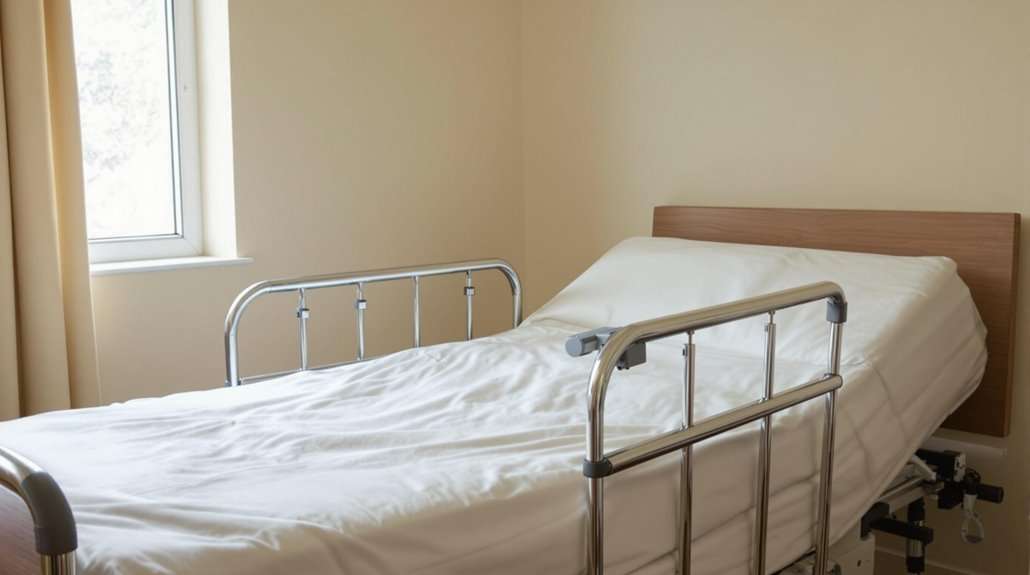



Bedrooms can pose significant hazards for seniors, compromising their safety and independence. Electrical and tripping risks, such as cords and overloaded outlets, can lead to falls and electrical shock. Beds and furniture can also be hazardous if not properly adjusted or spaced. Inadequate lighting can exacerbate existing mobility issues, while clutter and storage perils can create obstacles and tripping hazards. Additionally, fire and emergency threats can have devastating consequences. Understanding these hazards is vital to creating a safe and supportive environment for seniors, and by exploring these risks in more detail, effective solutions can be implemented.
📋✅
- Effective cord management prevents electrical hazards, and regular inspections reduce the risk of tripping and electrical shock.
- Ensuring Bed Safety is essential as beds that are too high or too low can cause falls among seniors.
- Strategic lighting placement helps mitigate risks by illuminating walking paths and highlighting potential obstacles.
- Keeping clutter to a minimum ensures clear walkways and removes obstacles that could cause accidents among seniors.
- Having a fire extinguisher and conducting regular fire drills prepare seniors for potential emergencies in the bedroom.
Electrical and Tripping Hazards
Frequently overlooked, electrical and tripping hazards in the bedroom can pose significant risks to seniors, compromising their safety and independence. Effective cord management is pivotal to prevent electrical hazards. Keeping cords tucked behind furniture, using power strips, and securing cords with organizers or tape can reduce the risk of tripping and electrical shock. Regular inspections of cords for damage or wear are also essential.
In addition to cord management, it is imperative to prevent outlet overload. Verifying all outlets are secure and not overloaded can reduce the risk of electrical fires. Conducting regular electrical safety audits and having a fire extinguisher in the bedroom can also provide added safety.
To prevent tripping hazards, removing throw rugs, securing carpet edges, and keeping the bedroom floor clear of clutter are essential. Regular safety inspections of the bedroom can also help identify potential tripping hazards. A home care assessment can also help to identify other hazards such as loose bedding that can increase the risk of falls. Furthermore, poor lighting can create hazards that put individuals at risk of falling in the dark. By taking these measures, caregivers and family members can help create a safer and more secure environment for seniors, promoting their independence and overall well-being. By prioritizing electrical and tripping hazard prevention, we can reduce the risk of accidents and guarantee seniors feel safe and confident in their bedrooms.
Bed and Furniture Risks
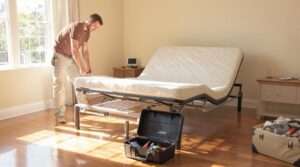
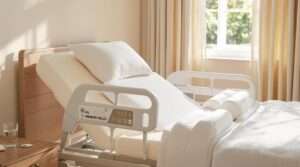
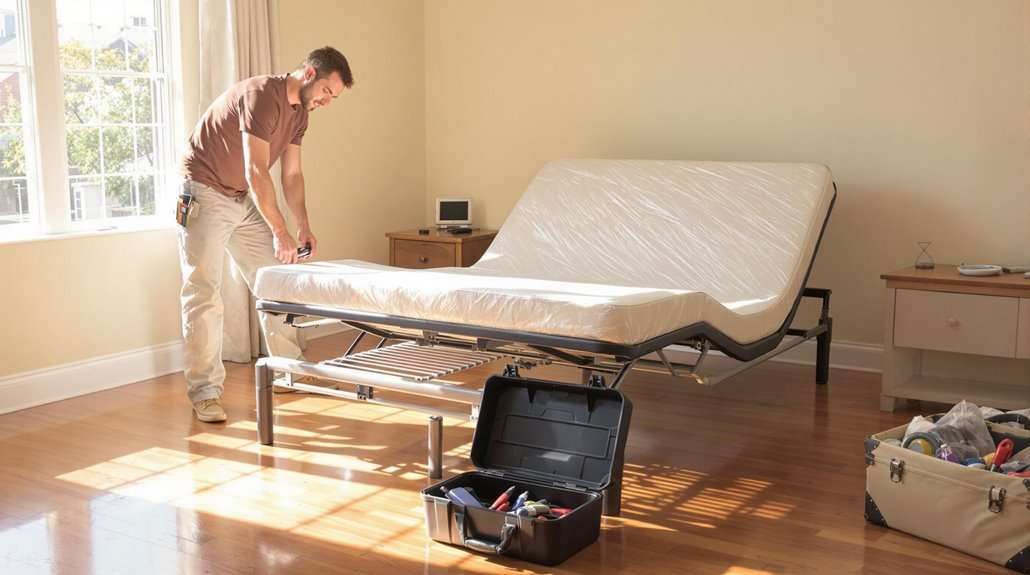
As we age, our bedrooms can pose unforeseen risks that threaten our safety and independence. One critical area of concern is Bed and Furniture Risks. Ensuring Bed Safety is essential, as beds that are too high or too low can cause falls. Adjustable beds should be adjusted to the most comfortable height for safe entry and exit, ideally between 20-23 inches high from floor to mattress top.
Proper Furniture Placement is also vital in preventing falls and injuries. Consider the following:
- Bedside tables should be close enough for seniors to reach without stretching, and sturdy nightstands that can support weight are necessary for balance assistance.
- A soft chair near the bed can provide balance support and prevent falls.
- Furniture should be appropriately spaced to help prevent falls, and nightstands and other furniture should be free of clutter for easy access to essential items. Circulation issues can be mitigated by elevating legs while resting in bed to reduce the risk of blood clots. Approximately 1 in 3 adults over 65 falls each year, making it crucial to prioritize bedroom safety for senior living and health care.
Lighting and Visibility Dangers
Traversing a dark or poorly lit bedroom can be a perilous task, especially for seniors whose mobility and visual acuity may be compromised by age-related health issues. Dim lighting poses significant risks, including increased likelihood of falls due to reduced visibility and difficulty piloting the room safely. In addition, inadequate lighting can exacerbate existing mobility issues, making it challenging for seniors to move around their bedroom with confidence.
In addition to the risks associated with dim lighting, shadowy corners can also create hazards. Poorly lit areas can conceal obstacles, such as clutter or furniture, making it difficult for seniors to avoid tripping or falling. Strategic lighting placement, including the use of nightlights and motion-sensitive lights, can help mitigate these risks by illuminating walking paths and highlighting potential obstacles. By prioritizing high-quality, consistent lighting, caregivers and family members can create a safer, more supportive environment for seniors, reducing the risk of accidents and promoting overall well-being. Effective lighting solutions can empower seniors to pilot their bedrooms with confidence and independence.
Clutter and Storage Perils
In the midst of a senior's bedroom, clutter and storage perils can pose significant risks to their safety and well-being. Cluttered shelves and hidden corners can be particularly hazardous, as they can lead to tripping and falling. It is essential to keep clutter to a minimum, ensuring clear walkways and removing any obstacles that could cause accidents.
Some specific clutter and storage perils to be aware of include:
- Cluttered floors, which can increase the risk of falls and make it difficult to move around the room
- Bedside hazards, such as out-of-reach bedside tables or cluttered surfaces, which can cause falls when stretching to retrieve items
- Poorly placed furniture, which can create obstacles and increase the risk of tripping and falling
Fire and Emergency Threats
Safety is a paramount concern in a senior's bedroom, and fire and emergency threats pose vital risks to their well-being and independence. Electrical safety is a pivotal aspect of fire prevention, and measures such as verifying cords are not frayed or damaged, avoiding overloading outlets, and keeping electrical cords away from heat sources can substantially reduce the risk of fire. Additionally, regularly inspecting heating appliances and lamps for damage, keeping flammable materials away from heat sources, and avoiding candles or open flames can also prevent fires.
Developing an emergency plan with clear escape routes and conducting regular fire drills can help prepare seniors in the event of an emergency. Keeping emergency contact information readily available and confirming that exits are clear and unobstructed are also essential components of an effective emergency plan. Moreover, installing working smoke alarms on every level of the home and regularly inspecting appliances and devices for recalls can also help prevent fires and safeguard the senior's safety. By taking these proactive measures, caregivers and family members can help mitigate the risk of fire and emergency threats in the senior's bedroom.
Frequently Asked Questions
How Often Should a Senior's Bedroom Be Inspected for Potential Hazards?
A senior's bedroom should be inspected daily for immediate hazards, weekly for layout changes and monthly for in-depth assessments. Safety checklists and home assessments can guarantee thorough evaluations and prevention of potential risks.
Can Clutter Contribute to Stress and Anxiety in Seniors?
Clutter can substantially contribute to stress and anxiety in seniors, compromising mental clarity and creating safety obstacles that increase the risk of falls, injuries, and emotional distress, emphasizing the need for regular decluttering and organization.
What Role Do Caregivers Play in Preventing Falls in the Bedroom?
Caregivers substantially mitigate fall risks by implementing targeted safety measures in the bedroom, such as removing tripping hazards, securing furniture, and improving lighting, ultimately safeguarding seniors' well-being and fostering a supportive environment.
Are There Any Local Resources for Seniors to Access Fall Prevention Information?
Local resources, such as Area Agencies on Aging, provide seniors with accessible fall prevention information, addressing senior safety concerns and alarming fall statistics, empowering individuals to take proactive measures in reducing their risk.
Can Certain Medications Increase the Risk of Falls in Seniors?
Like a puzzle with missing pieces, medication interactions can be a hidden threat to seniors, increasing the risk of falls. Regular dose adjustments and medication reviews can help mitigate this risk, promoting a safer and healthier life.
Traversing the bedroom can be a minefield for seniors. Like an iceberg, many hazards lie beneath the surface, waiting to cause harm. Electrical cords, slippery floors, and poor lighting can all contribute to falls. Bed and furniture design can also pose risks, including entrapment and crushing. Clutter and storage problems exacerbate these dangers. Implementing safety measures and removing hazards can help mitigate these risks, creating a safer environment for seniors to rest and recharge.