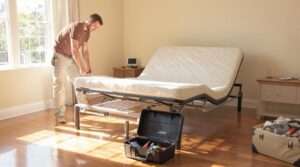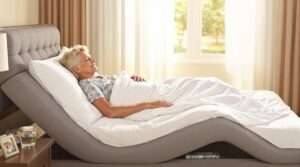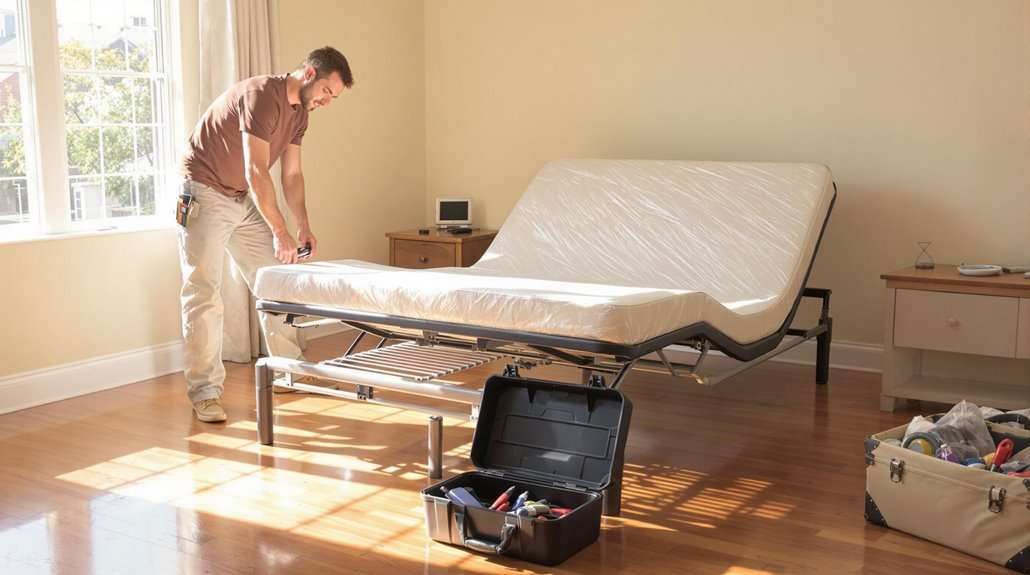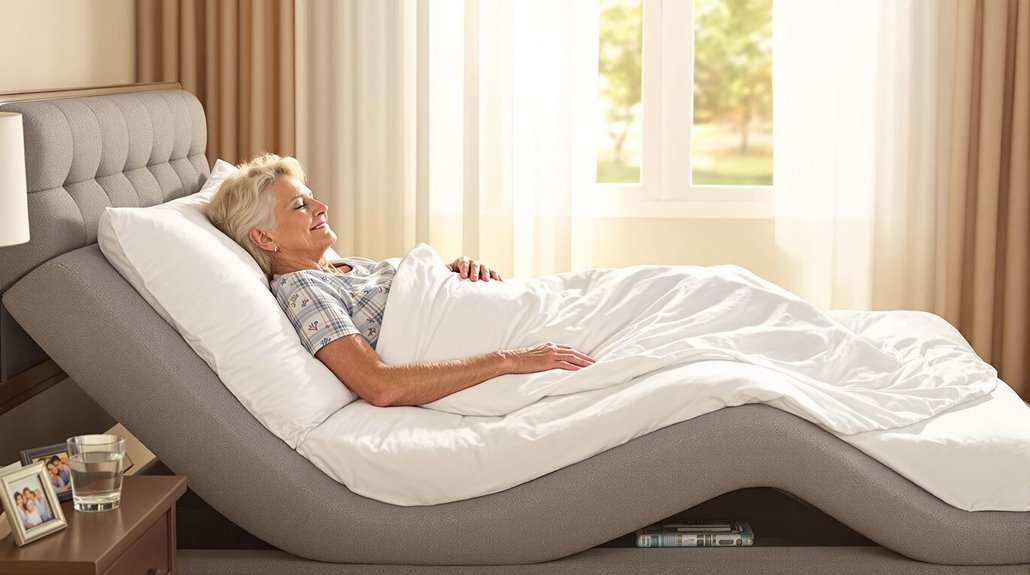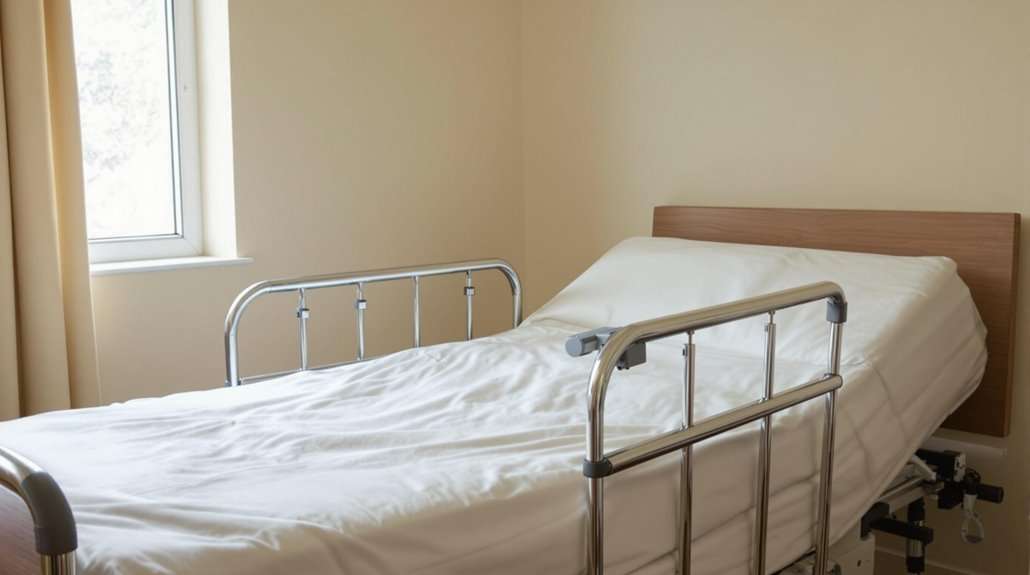



Adjustable beds provide significant health benefits for elderly individuals, offering customizable positioning that enhances joint comfort and reduces chronic pain. The motorized functionality allows seniors to independently adjust their sleeping position, promoting better circulation and reducing swelling. These beds feature specialized settings, including Zero Gravity positions, which contribute to improved sleep quality and reduced pressure points. Medicare Part B may cover 80% of costs when prescribed for medical necessity. Advanced features like memory settings, USB ports, and quiet motors guarantee ease of use and comfort. For a thorough understanding of how adjustable beds can enhance senior well-being, explore their full range of therapeutic advantages.
📋✅
- Adjustable beds enable independent positioning control, helping seniors maintain autonomy while reducing strain on caregivers.
- Zero Gravity settings improve circulation, reduce joint pain, and promote better sleep quality for elderly users.
- Customizable elevation options help prevent acid reflux, respiratory issues, and swelling in legs and feet.
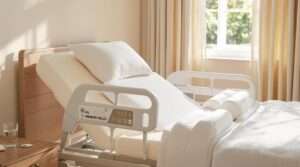
- Built-in safety features like side rails and adjustable height settings reduce fall risks during bed transfers.
- Memory foam mattresses combined with adjustable positions provide targeted pressure relief for arthritic joints and chronic pain.
Understanding Joint Health Support

Through proper joint support and positioning, adjustable beds serve as essential medical equipment for elderly individuals dealing with joint-related conditions. The customizable features of these beds enable precise adjustments to head and foot sections, delivering targeted pressure relief to specific areas of discomfort. This adaptability proves particularly beneficial for seniors experiencing arthritis or chronic joint pain. Similar to how dynamic content updates enhance website functionality, modern adjustable beds can smoothly transition between positions without disruption.
The ability to modify sleeping positions contributes greatly to enhanced joint mobility and reduced strain on pressure points. By allowing users to elevate different sections of the bed, these specialized frames help distribute body weight more evenly, minimizing stress on sensitive joints during rest periods. Medicare Part B coverage provides financial assistance for qualified adjustable beds, making them more accessible to seniors who need them. The customization capabilities extend beyond basic positioning, incorporating features like Zero Gravity settings that optimize body alignment and support.
For caregivers and healthcare professionals, adjustable beds represent a valuable tool in managing joint-related conditions among elderly patients. The beds' design facilitates proper anatomical positioning, which can help prevent joint stiffness and reduce inflammation. This targeted approach to joint health support enables seniors to maintain better mobility while potentially decreasing their reliance on pain medication for joint-related discomfort during sleep.
Quality Sleep and Rest
Beyond joint health support, adjustable beds play a significant role in promoting quality sleep among elderly individuals. These specialized beds facilitate ideal weight distribution, reducing pressure points that commonly disrupt sleeping patterns. By enabling customized positioning, seniors can achieve improved circulation and experience fewer sleep disturbances throughout the night. Memory foam mattresses provide optimal comfort and support for adjustable bed users. Seniors benefit from built-in side rails that ensure safety during sleep.
The beds' adaptable features address various sleep-related challenges faced by older adults. The ability to elevate legs and adjust body positioning helps minimize nocturia occurrences and alleviates symptoms of sleep apnea. Additionally, the Zero Gravity function provides enhanced pressure point relief, contributing to deeper, more restorative sleep cycles.
Adjustable beds accommodate individual comfort preferences through various customization options, including different mattress types and position settings. Hospital-grade models offer superior support for seniors managing arthritis or chronic back pain. The incorporation of whole-body vibration therapy and height adjustment features further enhances the therapeutic benefits, promoting better lymphatic and cardiovascular circulation. These thorough features work together to create an ideal sleep environment, allowing elderly individuals to maintain consistent, quality rest essential for their overall well-being.
Enhanced Independence for Seniors

Adjustable beds serve as powerful tools for promoting independence among elderly individuals, offering multiple features that enhance their ability to manage daily activities autonomously. The motorized functionality enables seniors to modify bed positions without assistance, considerably contributing to mobility enhancement and reducing reliance on caregivers. Nearly 70% of elderly users experience significant improvements in their ability to manage their daily routines independently.
These specialized beds facilitate safer entry and exit through adjustable height settings, minimizing fall risks and providing essential support during transfers. The inclusion of side rails offers additional stability, while remote controls allow seniors to make necessary position adjustments independently. USB charging ports on both sides of the bed provide convenient access to powered devices without stretching or straining. This mobility enhancement directly translates to greater confidence in performing routine tasks.
The beds' versatility supports daily activity independence by enabling comfortable positions for various activities, from reading to watching television. Dual controls in split-designed beds allow couples to maintain individual preferences without compromising each other's comfort. The integration of these beds into a thorough home safety strategy helps seniors maintain their autonomy while reducing potential hazards.
For those with chronic conditions or limited mobility, these beds provide essential support for performing daily tasks independently, ultimately fostering a sense of self-sufficiency and maintaining dignity in their living environment.
Improved Circulation Benefits
The circulation benefits of adjustable beds extend far beyond basic comfort, offering significant medical advantages for elderly individuals. Through precise elevation techniques, these beds facilitate improved blood flow throughout the body, particularly in the extremities where circulation issues commonly occur. The ability to adjust both head and foot positions helps prevent blood pooling and reduces swelling associated with conditions like varicose veins and edema. The dual motor system allows independent control of different bed sections for optimal circulation support. The quiet motors ensure peaceful adjustments without disturbing the patient's rest.
Key circulatory advantages include:
- Enhanced blood flow through customizable positioning, including cardiac chair and Trendelenburg positions
- Reduced swelling in legs and feet through strategic elevation options
- Prevention of pressure ulcers and bed sores through weight redistribution capabilities
For bedridden patients, adjustable beds provide essential support in managing circulation-related complications. The electric controls allow caregivers to modify positions without physically moving the patient, reducing strain while maintaining ideal circulation. When combined with pressure-relieving mattresses, these beds create an excellent environment for managing circulatory issues. The independent head and foot adjustments enable healthcare providers to customize positions based on specific patient needs, ensuring maximum therapeutic benefit while supporting overall cardiovascular health.
Medicare Coverage Information

Understanding Medicare coverage for adjustable beds requires maneuvering specific eligibility requirements and documentation processes. Medicare Part B covers adjustable beds as durable medical equipment (DME) when prescribed by a physician for specific medical conditions, including severe arthritis and respiratory diseases. Long-term value often outweighs initial costs when considering the health benefits of these beds.
| Coverage Aspect | Requirements | Patient Responsibility |
|---|---|---|
| Documentation | Doctor's prescription | Face-to-face visit within 6 months |
| DME Requirements | Medically necessary | Must be for home use |
| Cost Sharing | Medicare pays 80% | Patient pays 20% + deductible |
| Provider Status | Medicare-enrolled doctor | Medicare-approved supplier |
Medicare eligibility for adjustable beds demands that the equipment be durable, serve a medical purpose, and be suitable for home use. The 2025 Medicare Part B deductible of $257 must be met before coverage begins. Patients remain responsible for 20% of the Medicare-approved amount after meeting the deductible. Medicare Advantage plans provide similar coverage, though specific costs vary by plan. Additional financial assistance may be available through Medicaid or non-profit organizations for those struggling with out-of-pocket expenses. The bed must include adjustable head or foot positions and feature movable side rails to qualify for coverage. After a standard rental period of 13 months, ownership of the adjustable bed transfers to the beneficiary.
Adjustable Bed Features
Modern adjustable beds offer advanced position control settings that enable precise customization of head and foot positions for ideal comfort and therapeutic benefits. Built-in memory functions allow users to save their preferred positions, making it easier to return to comfortable configurations without repeated manual adjustments. The support systems in these beds typically include pressure-relieving mattresses and robust frames that can accommodate various medical needs while providing essential stability for users with mobility challenges. Users can easily control their bed positions through easy-to-use controllers that enable quick configuration changes.
Position Control and Settings
Adjustable beds stand out for their versatile position control settings, offering elderly users unprecedented command over their sleeping and resting positions. These beds provide customizable comfort through multiple positioning options, including head and foot elevation, zero-gravity, and anti-snore modes. With remote accessibility features, elderly users can easily adjust their position using simple controllers or remotes, which proves particularly beneficial for those with limited mobility. Stored memory positions enable quick transitions between preferred day and night settings. Many models offer quiet motors for unobtrusive position changes during the night.
The position control mechanisms deliver specific therapeutic benefits through:
- Elevation settings that help manage acid reflux and respiratory issues by raising the head gradually
- Zero-gravity positions that reduce pressure on joints and improve circulation
- Programmable memory settings that allow quick access to preferred positions for different activities
Advanced adjustment features include wall-glide technology, ensuring nightstand access remains convenient even when the head is elevated. Many models offer one-touch return to flat positions and battery backup systems for uninterrupted functionality. These beds accommodate various medical needs through Trendelenburg and Reverse Trendelenburg positions, while supporting weight capacities up to 400 pounds. The integration of massage units and lumbar support features further enhances the therapeutic value for elderly users managing chronic conditions.
Memory Function Benefits
Memory-saving capabilities represent one of the most valuable features of contemporary adjustable beds for elderly users, offering both convenience and therapeutic consistency. The memory enhancement function allows users to store preferred positions, streamlining daily adjustments and ensuring ideal comfort without repeated manual configurations. The enhanced comfort leads to better sleep experiences for seniors. Medical professionals often recommend adjustable beds with memory functions as they help maintain proper spinal alignment.
| Function | Benefit | Application |
|---|---|---|
| Position Storage | Reduces complexity | Pain management |
| Quick Recall | Enhances independence | Respiratory support |
| Multiple Presets | Customized comfort | Activity facilitation |
| Partner Settings | Individual control | Sleep optimization |
The user experience is greatly improved through integrated controls and technological features that make position recall effortless. Caregivers benefit from streamlined assistance procedures, while elderly users maintain greater independence through simplified operation. The memory function proves particularly valuable for managing chronic conditions, as therapeutic positions can be consistently maintained and easily accessed.
Advanced integration options, including Bluetooth connectivity and lockable settings, further enhance functionality while ensuring safety. The ability to save multiple positions accommodates various daily activities, from reading to sleeping, while supporting specific medical needs such as elevated positioning for circulation improvement or respiratory support.
Support System Options
Thorough support systems in contemporary care beds encompass a wide array of essential features designed to meet the diverse needs of elderly users. The extensive support system options available in modern adjustable beds combine motorized functionality with specialized mattress selections to create ideal comfort and therapeutic benefits. Through careful customization options, caregivers can tailor the bed's configuration to address specific medical requirements while ensuring maximum safety and comfort.
Key support features include:
- Motorized head and foot sections that enable precise positional adjustments, coupled with Trendelenburg and Reverse Trendelenburg capabilities for enhanced circulatory support
- Multiple mattress options ranging from pressure-relieving memory foam to specialized Pressure Guard systems, each designed to minimize pressure points and improve body alignment
- Dual control mechanisms in larger models, allowing independent adjustments for partners with different support needs
The integration of these support features with hi-low functionality and zero gravity positioning creates a versatile care environment. When combined with appropriate mattress selection, these customization options enable caregivers to establish individualized support protocols that effectively address mobility challenges, circulation concerns, and specific medical conditions common among elderly users.
Frequently Asked Questions
How Long Does a Typical Adjustable Bed Last Before Needing Replacement?
A typical adjustable bed lifespan ranges from 10-15 years, depending on durability factors such as usage patterns, maintenance practices, and component quality. Regular servicing and proper care can maximize operational longevity.
Can Regular Mattresses Be Used on Adjustable Bed Frames?
Studies show 85% of regular mattresses can be compatible with adjustable frames, provided they meet specific criteria. Key factors include adjustable mattress compatibility and mattress thickness considerations, typically recommending 8-12 inches for ideal functionality.
What Maintenance Is Required for an Adjustable Bed's Mechanical Components?
Regular mechanical inspections, following manufacturer's lubrication schedule, cleaning components, and checking electrical connections are essential. Professional servicing twice yearly guarantees peak performance and extends the bed's operational lifespan.
Are Adjustable Beds Safe to Use With Pacemakers?
While pacemaker manufacturers haven't issued dire warnings about beds attacking their devices, research indicates adjustable beds are safe for pacemaker patients. They offer excellent pacemaker compatibility and can actually enhance sleep quality safely.
Do Adjustable Beds Require Special Sheets or Bedding?
Yes, adjustable beds require specific bedding options. Deep-pocket fitted sheets and flexible materials are essential for sheet compatibility concerns. Specialized bedding guarantees proper fit and prevents bunching during position adjustments.
Adjustable beds represent a critical healthcare investment for elderly individuals seeking enhanced quality of life and medical support. Research confirms their substantial benefits for joint health, circulation, and sleep quality. While Medicare coverage varies, the documented advantages of these specialized beds – from reducing edema to promoting independence – make them an essential consideration in geriatric care planning. The combination of therapeutic features and customizable comfort positions establishes adjustable beds as valuable tools in senior healthcare management.